Grey Yellow 3D Flowers Cutting Boards: A Guide to Quality Sublimation Designs for Kitchen Decor
In the world of print-on-demand and custom kitchenware, visual appeal is only half the battle. The other half is technical precision. Many creators rush into listing products like Grey Yellow 3D Flowers Cutting Boards without fully understanding the nuances of sublimation printing or digital asset preparation. This oversight often leads to disappointed customers, wasted materials, and negative reviews. Whether you are a seasoned entrepreneur, a hobbyist looking to gift a personalized item, or a marketer curating a farmhouse-style collection, understanding the specifics of this design can save you significant time and money.
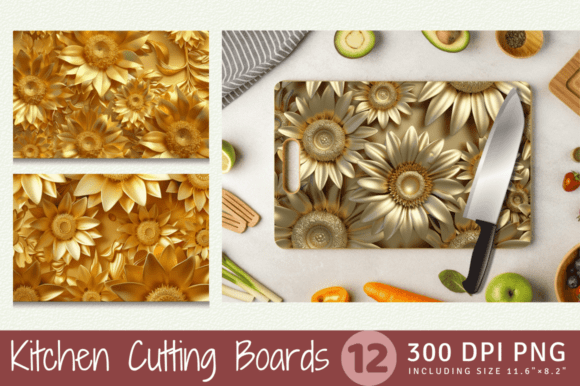
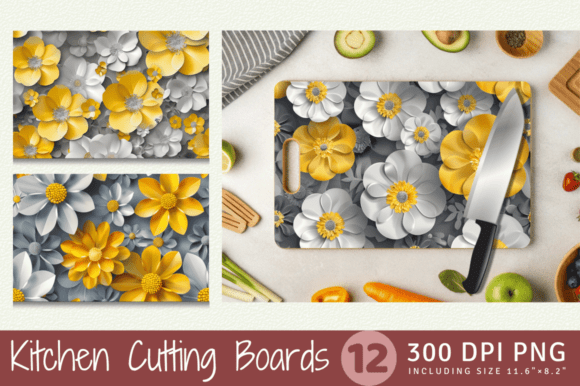
The popularity of floral motifs in kitchen decor is undeniable. The combination of soft grey tones with vibrant yellow accents creates a balanced aesthetic that fits seamlessly into modern, rustic, and transitional kitchen styles. However, the "3D" effect mentioned in the title is not just a marketing buzzword; it refers to the depth and shading required in the digital file to make the flowers pop off the surface when printed. If the source file lacks the necessary resolution or color profile accuracy, that depth disappears, leaving a flat, unappealing image.
Common Mistakes in Selecting and Using Sublimation Designs
One of the most frequent errors beginners make is assuming that any high-resolution image will work for sublimation. While the Grey Yellow 3D Flowers Cutting Boards design comes as a high-quality PNG at 3480×2460 pixels and 300 DPI, simply downloading it is not enough. You must understand how these dimensions translate to physical products. A common misunderstanding is ignoring the aspect ratio. The provided size of 11.6 × 8.2 inches is specific. If you attempt to stretch this image to fit a square board or a differently proportioned rectangular board, you will distort the flowers, making them look elongated or compressed. This distortion breaks the illusion of the 3D effect and lowers the perceived quality of the final product.
Another critical mistake involves color management. Sublimation printing relies on heat to transfer dye into polymer-coated surfaces. Colors on your computer screen (RGB) often look different when printed (CMYK or sublimation-specific profiles). Yellow, in particular, can be tricky. It may appear vibrant on screen but turn out pale or washed out if the printer’s color profile is not calibrated correctly. Grey tones can also shift, sometimes picking up unwanted green or purple casts if the white balance is off. Failing to test print a small section or adjust the brightness and contrast before full production can result in a batch of boards that look dull compared to the digital preview.
Understanding the Digital Nature of the Product
It is vital to clarify what you are purchasing. When you buy this design, you are receiving a digital download, specifically a ZIP file containing high-resolution PNG images. No physical cutting board will be shipped to you. This distinction is crucial for new sellers who might confuse digital assets with physical inventory. Misunderstanding this can lead to confusion in customer communication if you are reselling the finished product, or frustration if you expected a ready-to-use item.
Furthermore, the license terms are strict. The actual files may not be shared or resold in any form. This means you cannot upload the PNG directly to a marketplace as a digital product for others to print. You must use the design to create a physical end product, such as a printed cutting board, or incorporate it into a larger design where the original file is not easily extractable. Ignoring these terms can lead to copyright strikes and account bans on major platforms. Always read the usage rights carefully to ensure your business model aligns with the creator’s policies.
Practical Advice for Best Results
To avoid these pitfalls, start by verifying your substrate. Sublimation only works on items with a polymer coating or high polyester content. Standard wood or glass cutting boards will not accept the ink unless they have been specially coated. Check with your supplier to ensure the blanks you are using are sublimation-ready. If you are using aluminum or composite boards, ensure the coating is uniform and free of scratches, as any imperfection will show through the transparent nature of sublimation ink.
Next, prepare your file correctly. Use graphic design software to place the 3480×2460px image onto a template that matches your specific cutting board dimensions. Do not rely on automatic scaling features in your printing software. Manually check that the image fits within the safe zone, leaving a small margin if necessary to account for slight shifts during the pressing process. Mirroring the image is another step that is often forgotten. Sublimation transfers require the image to be printed in reverse so that it reads correctly once flipped onto the board. Forgetting to mirror the Grey Yellow 3D Flowers design will result in a backward image, which is particularly noticeable if there are any textual elements or asymmetrical floral arrangements.
Temperature and time settings are equally important. Each brand of sublimation paper and blank product has optimal settings. Generally, temperatures range between 380°F to 400°F for 60 to 180 seconds, but you must follow the manufacturer’s guidelines for your specific blanks. Use a heat press rather than an iron for consistent pressure and heat distribution. Uneven pressure can cause ghosting or blurred areas, ruining the crisp details of the 3D flowers.
Enhancing Your Product Lineup
Integrating this design into your offerings requires strategic thinking. Because the grey and yellow color scheme is versatile, it appeals to a broad demographic. It works well for spring-themed promotions, housewarming gifts, or as part of a cohesive kitchen set. Consider bundling the cutting board with matching items, such as oven mitts or aprons, if you can source or create complementary designs. This increases the average order value and provides a more complete solution for the customer.
For marketers and bloggers, highlight the durability and ease of care. Sublimated designs are resistant to fading and washing, unlike vinyl decals that can peel. Emphasize that the design is infused into the coating, making it food-safe and long-lasting. This practical benefit, combined with the aesthetic appeal of the 3D flowers, creates a strong selling point. Use high-quality photos of the finished product in real kitchen settings to show scale and context. Lifestyle images help customers visualize how the board will look in their own homes, reducing hesitation and increasing conversion rates.
Before finalizing your listing, double-check all details. Ensure the description clearly states that the product is handmade or custom-printed, which may imply slight variations. This manages customer expectations and reduces disputes. Provide clear care instructions, such as hand washing recommended to prolong the life of the board, even if the material is dishwasher safe. These small touches demonstrate professionalism and care, building trust with your audience.
In conclusion, while the Grey Yellow 3D Flowers Cutting Boards sublimation design offers a beautiful and trendy option for kitchen decor, success lies in the execution. By avoiding common technical mistakes, respecting licensing terms, and focusing on quality production methods, you can create a product that stands out in a crowded market. Take the time to test, refine, and present your work professionally, and you will find that this design can be a valuable addition to your creative portfolio or business inventory.